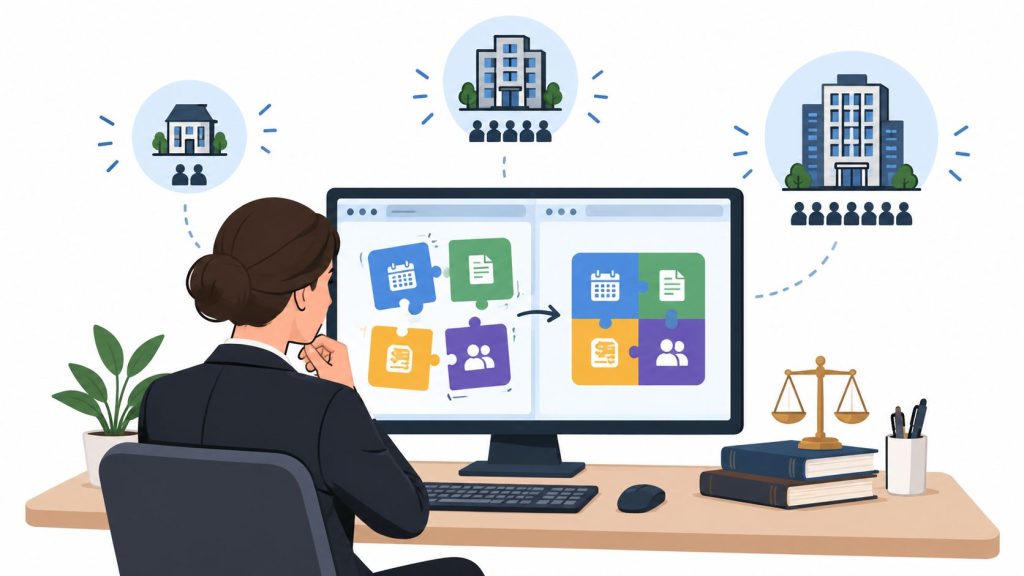
 16 minutes read
You can have a full staff calendar and still miss the handoff that matters most. A patient calls, the intake specialist in Latin America is online, the provider in the U.S. is in clinic, and the message sits in limbo because nobody defined who owns that hour. That's the problem with time zone overlap, it isn't a geography question, it's a scheduling-quality question.
For U.S. medical practices, the right answer is to treat overlap as a protected collaboration window tied to specific workflow events, not as a vague promise that “someone will be available.” A reception team needs live coverage during call peaks, a billing assistant may only need a short daily window for questions, and an insurance verification specialist may work mostly asynchronously except when a same-day exception comes in. If you're evaluating remote healthcare staff or medical virtual assistants, you need to know which tasks require real-time access, which can wait, and when daylight saving time will change the rules.
A distributed law firm can show full coverage on a staffing chart and still stall when a live decision is needed. A client question reaches a paralegal in Bogotá, but the partner who must approve the response is offline. A filing deadline is approaching, a court-date reminder needs confirmation, or a client callback requires an attorney's direction. The message waits, and the delay becomes missed intake, slower follow-up on filing deadlines, and more pressure on attorneys, paralegals, and managers.
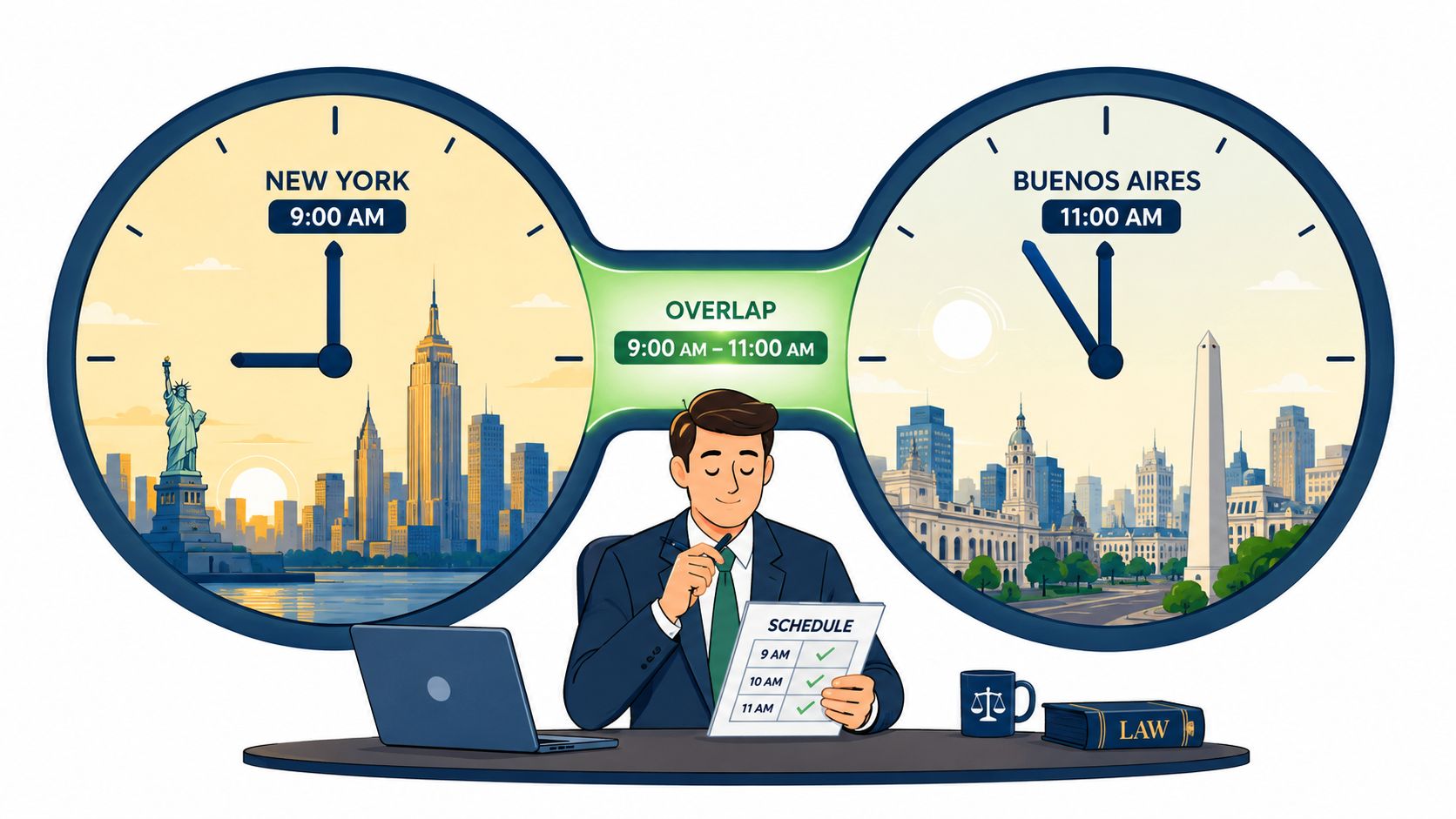
Time zone overlap gives those workflow events a defined period for shared action. The useful measure is not whether remote staff are working on the same day. It is whether the right roles are available together when a matter needs an answer, approval, escalation, or handoff. A legal intake specialist may need live access to a coordinator, while a document-review role can work independently for much of the day.
Overlap supports work that depends on rapid answers. It cannot replace clear ownership, sound matter management, or realistic staffing. If the shared window fills with low-value meetings, the firm loses time for client calls, filing decisions, and attorney support.

Practical rule: protect overlap for work that unblocks someone else. Schedule document preparation, routine research, inbox triage, and other independent tasks outside it.
For a law firm, the protected period may cover live client intake, client callbacks, court-date reminders, filing-status questions, urgent matter escalations, and brief end-of-day handoffs. Attorneys may need only a short decision window, while paralegals or intake staff require broader coverage. Role requirements should determine the schedule.
Set the window around real workflow events, then review whether it protects client response times, filing coordination, and attorney availability.
A legal team can schedule a “9 a.m. to 5 p.m.” shift and still create missed calls, delayed approvals, or rushed handoffs. The U.S. spans multiple time zones, from Eastern to Hawaii-Aleutian, while the continental zones generally shift by one hour. Most of Arizona keeps a fixed offset year-round. The same clock label therefore represents different client-facing coverage depending on the firm's location.
UTC provides a reference point, not a working schedule. Staff, clients, and attorneys operate in local time, so every shift, meeting, and handoff should name its time zone. A schedule that works during one season can move by an hour after daylight saving time changes if the firm and its remote team do not follow the same clock rule.
| U.S. Zone | Standard Time UTC Offset | Daylight Saving Time UTC Offset | Notes |
|---|---|---|---|
| Eastern | UTC−5 | UTC−4 | Common reference for East Coast firms |
| Central | UTC−6 | UTC−5 | Shifts live coverage one hour earlier than Eastern |
| Mountain | UTC−7 | UTC−6 | Most Arizona stays on UTC−7 year-round |
| Pacific | UTC−8 | UTC−7 | Earliest West Coast start, latest live overlap with LATAM daytime |
Eastern Time usually provides the broadest practical overlap with Latin American daytime schedules. Central Time still supports solid live coverage. Mountain and Pacific teams can work well with remote staff, but their most useful shared period often falls earlier in the U.S. day. Build the schedule around client calls, attorney decisions, intake activity, and filing coordination rather than treating a full-day shift as the objective.
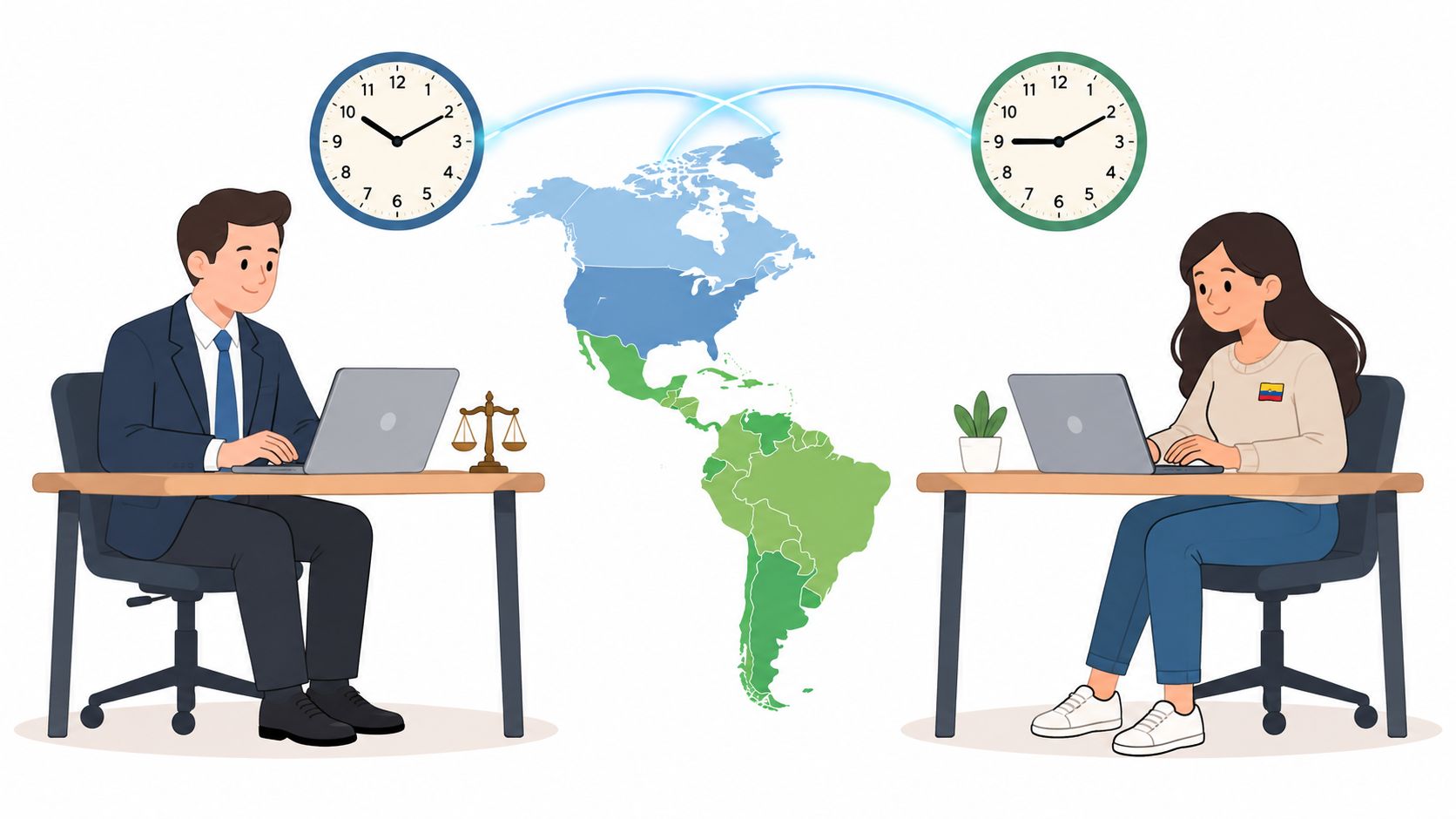
A Spanish-speaking legal virtual assistant on a conventional daytime schedule in Mexico, Colombia, Peru, Argentina, or Brazil will not align identically with every U.S. firm. An Eastern Time firm can often create a comfortable live window during ordinary business hours. A Pacific Time firm may need an earlier start, a narrower live block, or a defined handoff for work that cannot wait until the next morning.
Use the world-clock features in Google Calendar to compare local times before publishing shifts or booking client meetings. Clio's scheduling features can also help keep matter-related appointments tied to the intended time zone. These tools reduce mental conversion errors, but they do not replace a written DST rule and a named owner for each handoff.
Match three variables before judging a staffing window: the firm's U.S. time zone, the support professional's country, and the live work that must happen together. A deposition-preparation call, a court-filing cutoff, and routine case-file updates place different demands on the same hours.
| U.S. Practice Zone | Mexico | Colombia | Peru | Argentina | Brazil |
|---|---|---|---|---|---|
| Eastern | Strong mid-morning to early afternoon overlap | Strong mid-morning to early afternoon overlap | Strong mid-morning to early afternoon overlap | Useful overlap, often later in the Latin American day | Useful overlap, depending on local DST rules |
| Central | Good morning overlap | Good morning overlap | Good morning overlap | More limited live window | More limited live window |
| Mountain | Morning-focused overlap | Morning-focused overlap | Morning-focused overlap | Tight live window | Tight live window |
| Pacific | Early morning overlap | Early morning overlap | Early morning overlap | Narrow live window | Narrow live window |
Use this table as a scheduling starting point, not as a promise that every hour supports every role. A paralegal coordinating a deposition needs the attorney, client, court reporter, and witness reachable at the same time. A legal assistant preparing exhibits may need only a short check-in before working independently. A billing specialist handling follow-up can often work asynchronously, with a defined period for resolving disputed entries or missing matter details.
The pairing becomes more practical when tied to workflow events. An Eastern Time firm may reserve its shared mid-morning period for client callbacks, attorney approvals, and deposition logistics, then assign document organization and case-file review to independent work. A Central Time team may schedule its first live block earlier so staff can resolve intake questions before attorneys begin hearings or consultations. The table's “good” or “strong” window has value only when it covers the firm's actual decision points.
Western firms face tighter morning coordination with Latin American daytime schedules. That does not prevent effective coverage, but it leaves less room for casual availability. A Pacific Time legal team might use the early shared period for new-client calls, urgent attorney questions, and same-day filing coordination. Later work can include billing follow-up, document formatting, legal research support, and case-file updates that do not require an immediate response.
Court deadlines require separate handling. If a filing cutoff falls near the end of the firm's day, assign a named owner, set the deadline in the firm's home time zone, and create an earlier internal checkpoint for document review. A remote staff member should not have to infer whether “by five” means the attorney's local time, the court's time, or the staff member's time.
Pin calendars and shift instructions to both locations. Google Calendar's world-clock features can help compare local times before publishing shifts or booking client meetings. Clio's scheduling features can help keep matter-related appointments tied to the intended time zone. These tools reduce conversion mistakes, but they do not replace a written daylight-saving rule, a clear deadline convention, and a named owner for each handoff.
Recheck the pairing when clocks change, particularly for Argentina, Brazil, Mexico, and U.S. zones with different daylight-saving practices. A schedule that worked during one part of the year can move an hour relative to client calls, attorney availability, or court-related work. Record the effective local times in the operating procedure, then test a real workflow before relying on the revised overlap.
Overlap should be scheduled around the events each legal role must handle live. A legal receptionist may need coverage for incoming client calls and urgent message routing, while a billing or administrative assistant can complete much of the day's work asynchronously. A case manager may need a predictable window for attorney questions, status decisions, and escalation rather than continuous availability.
The schedule should reflect those differences. Giving every role the same full-day overlap fills calendars with unnecessary meetings and reduces focused work. Providing too little shared time delays client responses, filing coordination, case updates, and attorney handoffs.
| Role | Synchronous Workflow Events | Recommended Overlap Type |
|---|---|---|
| Legal receptionist | Incoming client calls, message routing, urgent callbacks, appointment scheduling | Broad daily live coverage during call peaks |
| Intake specialist | Lead qualification, conflict-check information, new-client screening, consultation booking | Front-loaded overlap during the first part of the firm's day |
| Legal assistant | Attorney questions, document review, filing-deadline escalation, court-date reminders | Fixed daily overlap aligned with attorney availability |
| Case manager | Client status calls, case updates, evidence or document requests, escalation decisions | Medium overlap with a reliable decision window |
| Billing and administrative assistant | Billing questions, payment follow-up, calendar changes, inbox and document coordination | Brief targeted sync, followed by asynchronous execution |
For bilingual practices, especially immigration, personal injury, and family law practices, Spanish-language intake benefits from overlap that matches peak call volume instead of covering the entire shift. The same principle applies to firms serving clients nationwide: schedule client-facing roles around expected call and consultation windows, then give back-office roles focused time for records, documents, and follow-up.
A pre-vetted source of remote talent can help firms hire against the workflow they need, rather than forcing the workflow to fit a person's availability. The role profile in this guide to an assistant in a law firm offers a useful reference for breaking legal support work into defined responsibilities.
A remote legal assistant can support scheduling, client messages, document coordination, matter updates, billing follow-up, and administrative preparation. They should not provide legal advice, make attorney decisions, or handle work outside their authorized responsibilities. Define the live events first, then assign a person with the skills and access required for those events.
Practical rule: define the live moments first, then hire the person who can cover them well.
Role design also determines response standards. A receptionist or intake specialist needs a wider live window because missed calls and delayed screening can affect new-client conversion. A case manager needs dependable access for decisions and escalations. A billing or administrative assistant usually needs a shorter, predictable sync, with clear ownership for anything that cannot wait until the next overlap window.
A protected overlap block earns its place by producing decisions, clearing live tasks, and leaving usable context. Anchor collaboration to the firm's home time zone, then protect the remaining hours for focused execution. The exact pattern should reflect the workflow events that require another person's answer.
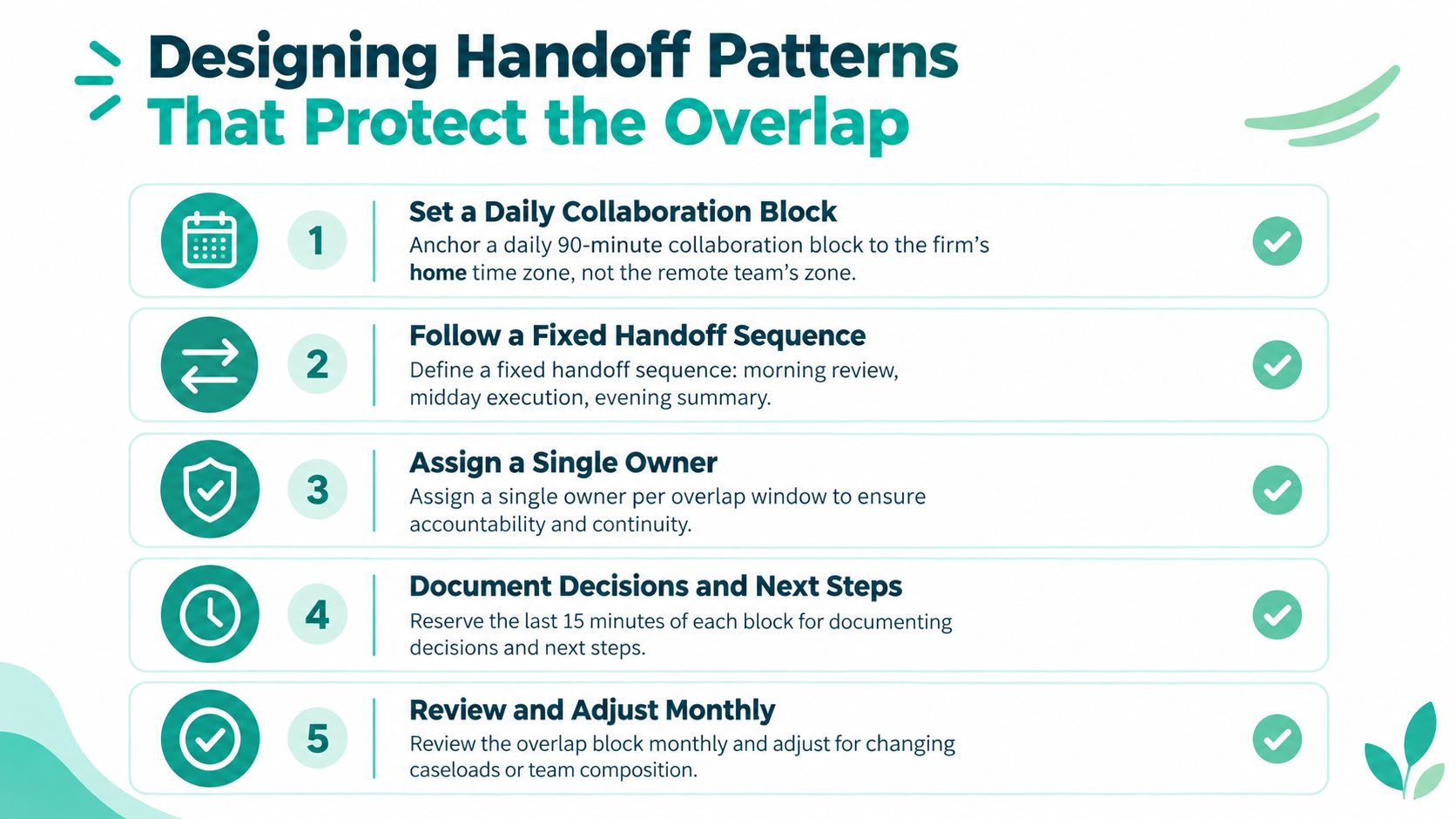
The daily flow should feel predictable. A clear handoff makes the next action obvious and reduces the time an office manager spends chasing status updates. Firms defining responsibilities and coverage can also use guidance on how to manage a remote legal assistant when setting ownership and escalation rules.
Open with a review of urgent client messages, pending consultations, filing dates, document requests, and matter changes received overnight. Use the middle of the overlap for work that needs a live response, such as intake, scheduling, callbacks, document review, or short attorney questions. Close with a written summary covering completed work, open items, deadlines, and escalations.
The final step preserves context across shifts. It should identify the matter, current status, next owner, due time, and any client or filing risk. That record reduces repeated questions and keeps communications consistent, even when the next worker is in another time zone.
A collaboration window should not become a default meeting window. Routine meetings consume the same hours needed for intake decisions, filing coordination, document corrections, and client callbacks. Reserve live time for events where delay creates rework, missed commitments, or avoidable client impact. The fastest-moving client and filing needs should determine what receives priority.
A shared operations space can make the schedule visible. For example, calendar management software for remote legal and admin teams can show the overlap block, assign owners, and keep pending handoffs from disappearing. The tool does not decide which work belongs there. Firm leaders must set that rule and review exceptions.
Keep the overlap block short enough to protect focus, long enough to handle live issues, and consistent enough that people trust it.
Daylight saving time is the scheduling exception that keeps showing up twice a year. In the United States, clocks move forward at 2:00 a.m. on the second Sunday in March and move back at 2:00 a.m. on the first Sunday in November, which creates a recurring one-hour shift in how teams line up. Some U.S. jurisdictions don't observe it, including Hawaii, most of Arizona, American Samoa, Guam, the Northern Mariana Islands, Puerto Rico, and the U.S. Virgin Islands.
That matters because not every Latin American jurisdiction changes clocks on the same schedule, and some don't change at all. The result is that the apparent overlap between a U.S. practice and a remote assistant can shrink or expand without either location physically changing. A recurring intake block, a provider standup, or a patient callback window can suddenly land in the wrong local hour.
The first thing that breaks is usually the recurring meeting. A standing call that worked in February can shift in March or November if the calendar was built on a fixed offset rather than a named time zone. After that, deadlines and reminders start landing at the wrong local time, and patient-facing work becomes harder to trust.
That's why firms should store schedules in named zones such as America/New_York or America/Chicago instead of saying someone is “three hours behind Eastern.” Named zones recalculate automatically when the clock changes, which is exactly what you want when patient communication has to stay consistent.
The important thing is not to treat DST as a rare surprise. It's a recurring continuity issue, and it should be handled the same way you'd handle a provider vacation, a system upgrade, or a court holiday. If you don't review it, the calendar will review it for you.
The cleanest scheduling policy is the one people can follow without asking for help every week. Publish the shift in a named time zone, include the local U.S. reference zone, and measure overlap in minutes rather than assuming a nominal full-time shift equals real availability. That simple change makes it easier to compare a receptionist, intake specialist, billing assistant, or patient coordinator on the same terms.
A second rule is to tie overlap to workflow events. Live calls, urgent patient questions, provider handoffs, and same-day scheduling belong in the shared window. Document prep, inbox cleanup, chart updates, and much of billing support can happen outside it. That keeps your team responsive without turning every day into a meeting-heavy mess.
For practices that want pre-vetted bilingual support, VirtualLegal is one option to consider. It matches U.S. firms with Latin American legal support professionals, and the model includes U.S.-aligned schedules, prior U.S. law-firm experience, interview-before-hire, and a shortlist delivered within about 24 hours. Those features line up well with practices that need reliable live coverage and consistent handoffs.
The takeaway is straightforward. Time zone overlap works when you treat it as a staffing asset, not a slogan. Define the live window, tie it to the right workflow events, and audit it again when daylight saving time changes.
If you're ready to build overlap into a real staffing plan, visit VirtualLegal and review remote support options for patient-facing, scheduling, and administrative coverage. The right hire isn't just available, it's available when your practice needs the work done.