
 14 minutes read
You're finishing a consultation when another prospective client calls. Your receptionist is already on the phone, a client is waiting for a case update, and an attorney is searching an inbox for documents that should be in the matter file. None of these tasks requires legal strategy, but each competes with work that does.
A law firm virtual assistant is a remote support professional who handles defined administrative and matter-support workflows under your firm's supervision. The right hire can manage intake, scheduling, document coordination, follow-ups, case-system updates, and billing administration. The wrong setup just moves an unclear job description off-site and gives another person access to confidential information.
The decision therefore starts with work ownership and access scope, not an hourly rate. Decide which queue the assistant will manage, what a completed task looks like, which questions require attorney review, and which systems the person needs. A solo immigration practice may need bilingual intake and consultation scheduling, while a midsize litigation firm may need document coordination and milestone tracking. Both can benefit from remote support, but their hiring criteria, permissions, and measures of success should look different.
The operational bottleneck is usually unfinished coordination: calls without follow-up, documents without filing instructions, or client messages without an assigned owner. A virtual assistant should take responsibility for a defined workflow, rather than become the person everyone forwards miscellaneous work to.
Legal support is an established occupational category. The BLS reported approximately 404,900 paralegal and legal-assistant jobs in 2025, with 75% in legal services, and projects approximately 40,800 annual openings over the decade, primarily from replacement demand rather than expansion (BLS paralegal and legal-assistant outlook). That supports screening for actual law-firm experience, not assuming that general administrative experience transfers automatically.
Job titles overlap, so evaluate candidates against daily responsibilities.
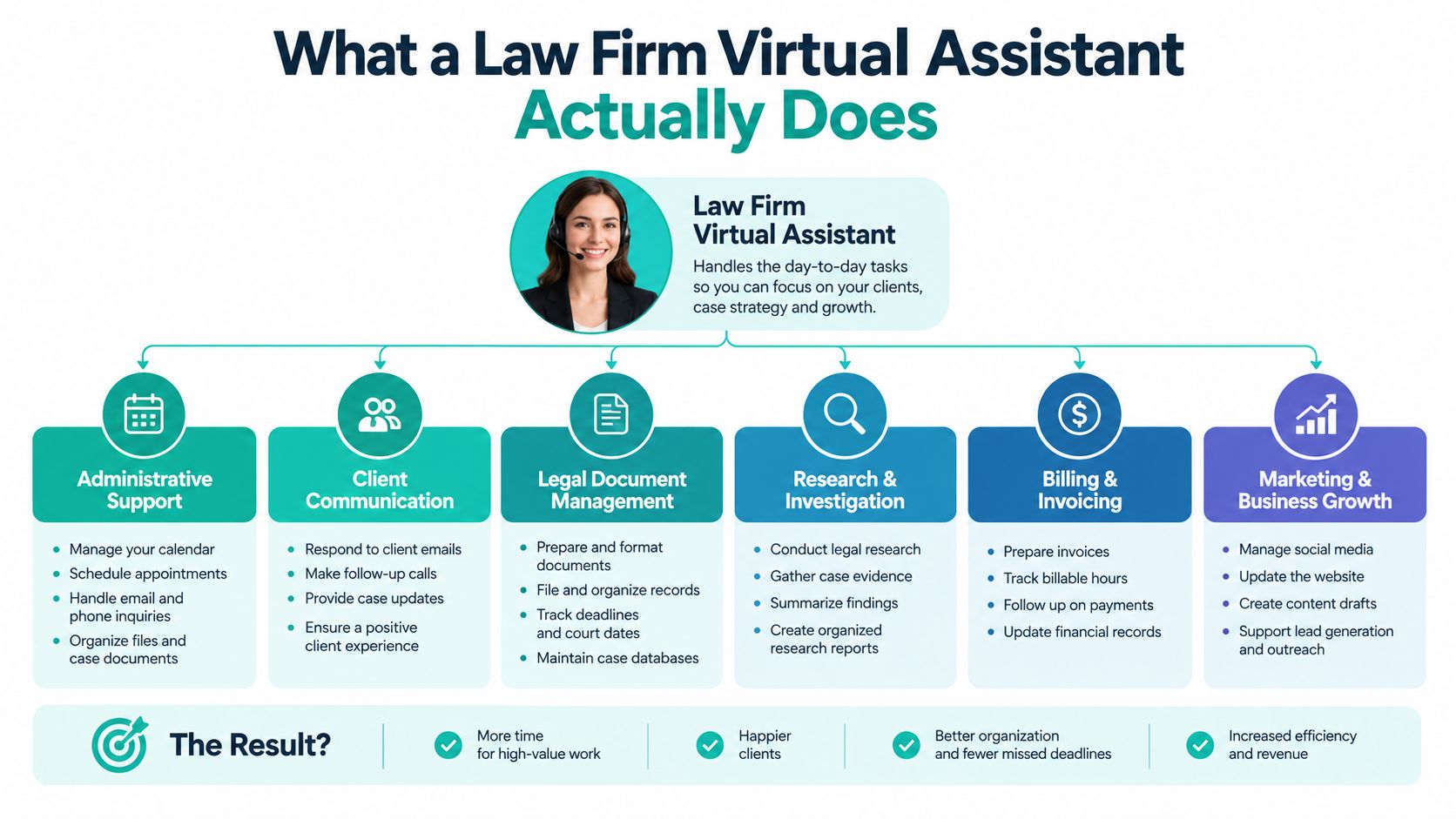
An assistant can assemble an exhibit packet, but an attorney should decide what supports the argument. An assistant can enter an approved deadline, but shouldn't independently resolve an ambiguous deadline calculation. Legal strategy, legal advice, representation in court, and decisions requiring licensed judgment stay with appropriately authorized professionals.
For a solo family-law practice, reception and scheduling may be the immediate gap. A plaintiff firm might need someone to track requested records and unanswered client questions, while an immigration practice might prioritize bilingual intake and document collection. These are illustrative role designs, not interchangeable job descriptions.
Write the scope around inputs, actions, outputs, and escalation. For example, a document coordinator receives an attorney's checklist, requests missing items, organizes the approved folder, and flags discrepancies. That's more useful than asking someone to “help with cases,” because both the assistant and supervisor can recognize when the work is complete.
The strongest operational case for remote support is that attorneys stop being the default owners of routine queues. Delegation creates usable capacity only when the assistant can finish work without repeatedly asking the attorney to reconstruct the process. A cheaper hire who needs constant clarification may reduce payroll expense while increasing supervision demands.
Remote infrastructure makes this model practical for many firms. The ABA's technology report found remote-access availability among solo respondents rose from 46% in 2020 to 61% in 2023, while small-firm access increased from 80% to 82%; cloud-software use among all attorney respondents rose from 59% to 69% (ABA solo and small-firm technology report). Access alone, however, doesn't establish a dependable workflow.
Consider an associate who interrupts drafting to locate attachments, confirm appointments, and chase missing signatures. Assigning those tasks to an assistant can protect concentrated work, provided the associate supplies instructions and a place to record completion. The benefit is not merely transferring tasks; it's reducing avoidable interruptions and incomplete handoffs.
Don't assume every recovered hour becomes billable revenue. Attorneys may use the capacity for supervision, business development, or overdue client communication, and hourly firms still need sufficient demand and collections. Contingency practices should assess progress and capacity differently from firms that invoice attorney time.

Operational test: If the attorney still has to check every inbox to discover what happened, you've delegated activity without delegating ownership.
Intake deserves particular attention. A secret-shopper study summarized by the ABA found that only 40% of firms answered prospective-client calls in 2024, compared with 56% in 2019, and only 33% responded to email inquiries (ABA analysis of law-firm intake responsiveness). Those findings justify examining your own unanswered inquiries, not promising a particular conversion increase.
For an immigration or plaintiff practice, bilingual coverage can let clients communicate intake details in their preferred language. Schedule alignment matters just as much: an assistant who overlaps with consultations and inbound demand is more useful for live intake than someone available only after your office closes. Confirm the actual work schedule, holiday coverage, and backup arrangements rather than relying on a time-zone label.
Evaluate the operational advantages of outsourcing legal support against your bottleneck. Remote staffing is a poor fit when the main need is physical reception, original-document handling, or work the firm hasn't yet defined clearly enough to delegate.
Hiring adds another person to your information environment. That person may see privileged communications, prospective-client details, billing records, and sensitive documents, so permissions must follow the role rather than the convenience of a shared login.
The ABA's cloud survey reported approximately 75% of attorneys used cloud computing, while about 55% cited confidentiality and security concerns; only 48% reported changing internal policies, fewer than 30% reviewed relevant ethics rules, privacy policies, or vendor terms, and almost 20% used no cloud-security precautions (ABA cloud-computing technology report). Treat those gaps as a reason to establish controls before expanding access.
ABA Formal Opinion 498 emphasizes that virtual practice doesn't displace duties of competence, diligence, communication, confidentiality, and supervision (ABA guidance on virtual practice). The supervising lawyer needs procedures for how remote staff access, transmit, store, and discuss client information.
An intake assistant may need the inquiry queue and consultation calendar, but not unrestricted access to every matter or financial record. Start with least-privilege permissions, then expand access when an approved responsibility requires it. Where your software cannot restrict access adequately, change the workflow or consider a more controlled working environment rather than accepting broad permissions by default.
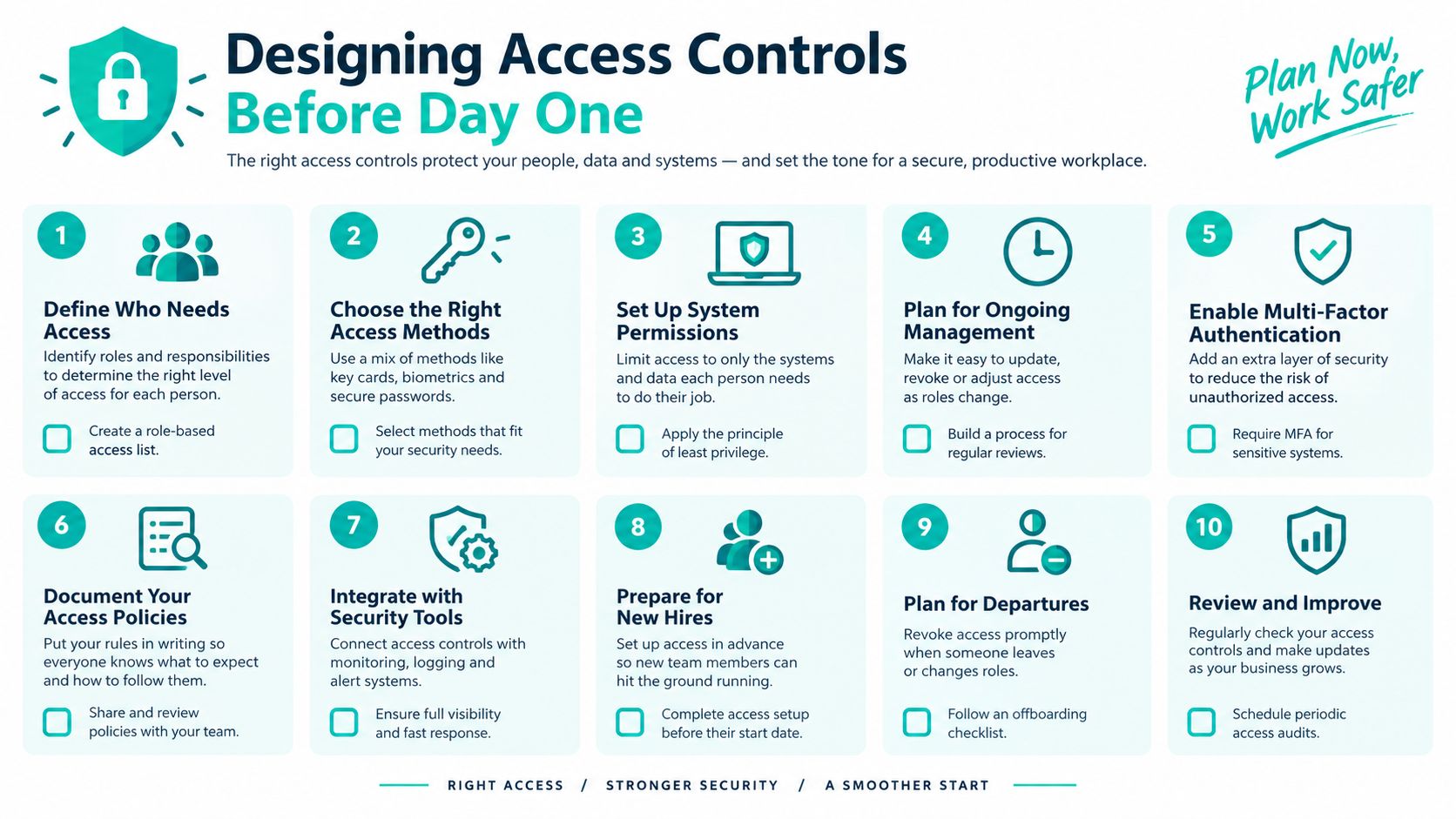
The Colorado Bar's virtual-practice guidance recommends device and router passwords, timely updates, remote-wipe capability, protection against household access, and retrievable archives (Colorado Bar remote-device safeguards.pdf?ver=TN0CpGaCAQqLxxYEGwWklA==)). Use those recommendations to evaluate personal-device arrangements rather than assuming a confidentiality agreement is enough.
Connect permissions to your law-firm document-management procedures, including naming, storage, review, and retention. Restrictions may add friction, but unrestricted downloads aren't an acceptable substitute for fixing a cumbersome process.
A polished interview doesn't establish whether a candidate can maintain a clean matter record or recognize when a client question requires escalation. Hire against the work sample and the operating environment, not confidence alone. Prior U.S. law-firm experience is useful, but practice-area familiarity and judgment about role boundaries still need testing.
Start with a written role profile covering responsibilities, working hours, languages, software, approval points, and access restrictions. Give the recruiter examples of the work that currently stalls. Ask for a shortlist matched to your needs and a realistic delivery estimate, but don't confuse shortlist speed with readiness to handle confidential work.
Use an asynchronous interview to assess written communication and instruction-following, then a live interview to test listening and escalation judgment. A role-specific skills exercise should use fictional or sanitized information: have an intake candidate record a simulated inquiry, or ask a legal assistant to organize a sample document packet and flag missing materials.
Request practical legal-software testing and a background check appropriate to the role and applicable requirements. Someone familiar with Clio may still need substantial training in your conventions, so test the actions they'll perform rather than accepting a list of software names. Relevant systems may include Clio, MyCase, Filevine, CASEpeer, SmartAdvocate, Smokeball, RingCentral, and DocketWise.
Ask the candidate what they would refuse to answer without attorney guidance. That response can reveal more than a rehearsed description of their experience.
| Option | Best Fit | Typical Commitment | Pricing Anchor |
|---|---|---|---|
| Part-time support | A bounded queue or limited coverage window | Agreed schedule and contracted hours | Rate or package tied to scope |
| Full-time dedicated support | Consistent demand across connected workflows | Dedicated availability under agreed terms | Full schedule plus included services |
| Monthly rolling arrangement | Firms seeking adjustable ongoing capacity | Renewal and notice terms in the contract | Monthly charge and change conditions |
| Direct remote hire | Firms able to manage recruiting and employment administration | Employment or contractor agreement | Compensation plus internal overhead |
These options can overlap: dedicated support may operate under monthly rolling terms. Confirm pricing before interviews, and ask whether interview-before-hire and no-deposit policies apply. Clarify minimum commitments, notice periods, absence coverage, equipment, and replacement charges in writing.
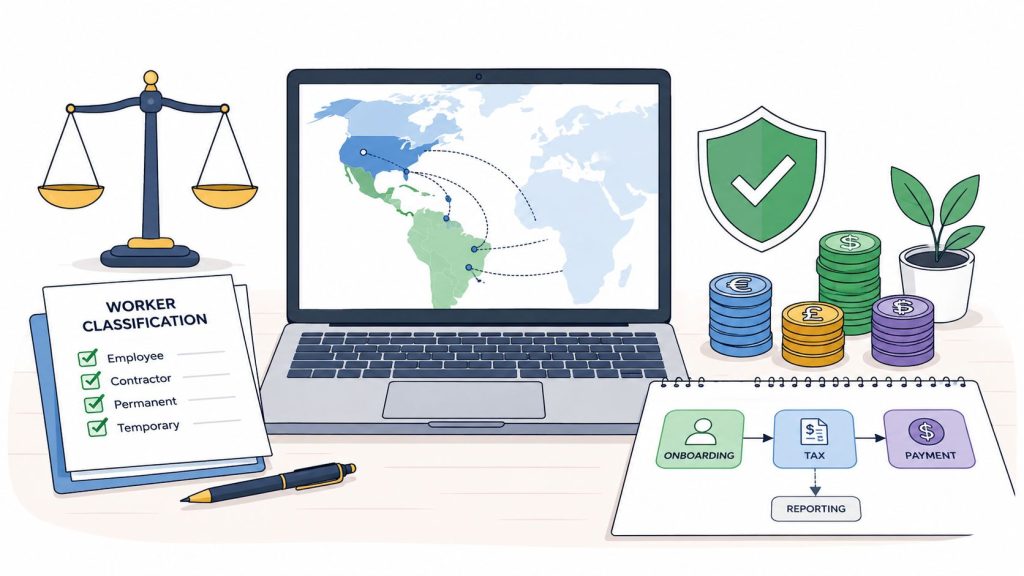
For international hiring, compare direct administration with a provider offering Contractor of Record, contracts, international payroll, onboarding, and replacement support. Those services may reduce administrative work, but they don't transfer your responsibility for legal supervision. Have qualified advisers confirm jurisdiction-specific employment, contracting, and professional-responsibility obligations.
Bilingual intake should be a supervised process, not a checkbox on a staffing profile. Speaking English and Spanish doesn't establish that someone can preserve legally material details, distinguish an inquiry from a retained matter, or explain the limits of their role. Test those abilities separately.
For an illustrative immigration intake, an assistant might collect names, preferred language, contact details, and a client's description of the issue. The assistant should preserve uncertainty and route substantive questions to the attorney rather than decide eligibility. In a personal-injury inquiry, the same principle applies to event descriptions, dates, and conflicting accounts.
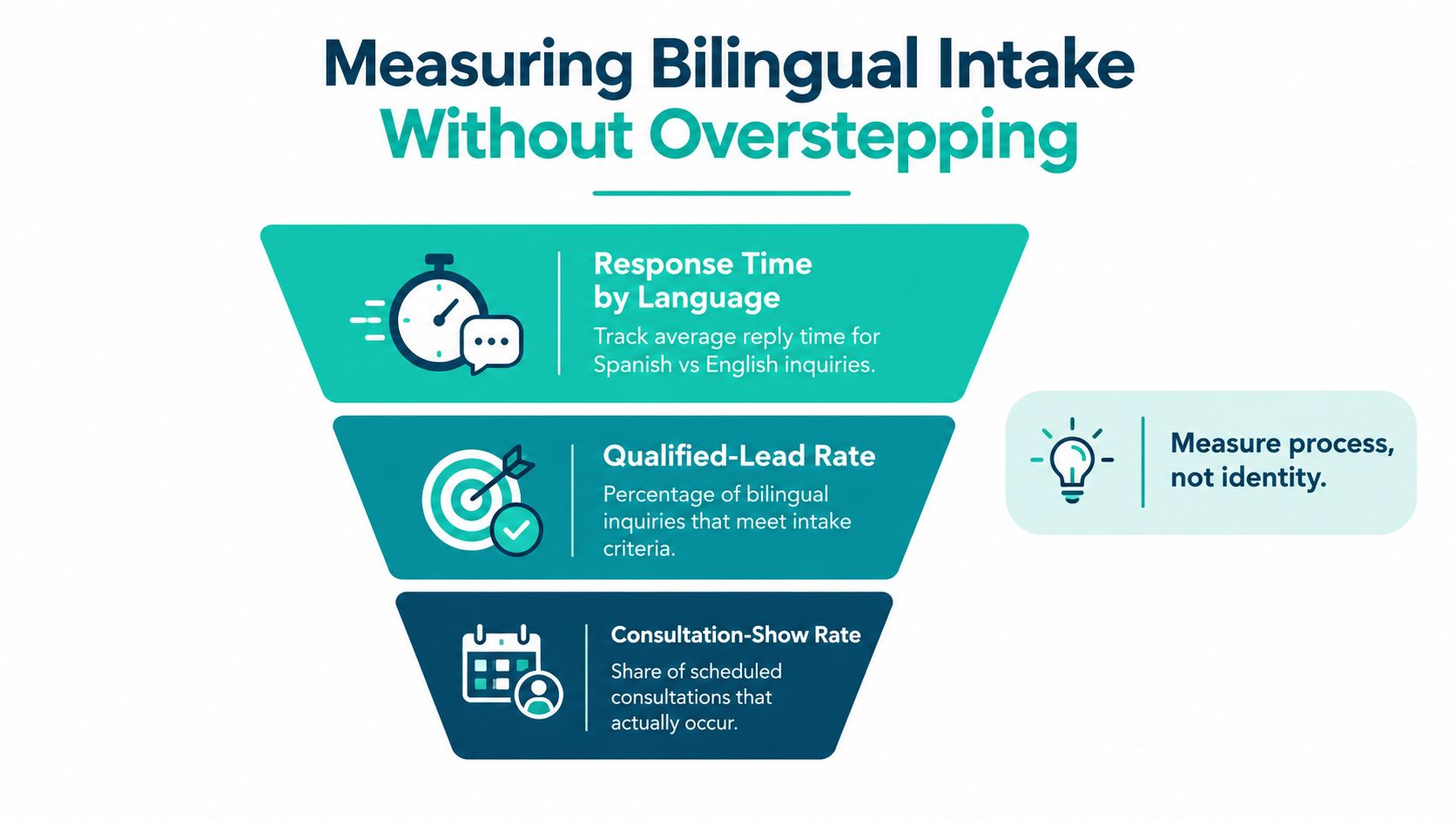
Your dashboard should separate responsiveness from downstream results. Measure response time by language, qualified-lead rate, and consultation-show rate, with consistent definitions so that a duplicate inquiry or rescheduled appointment doesn't distort comparisons.
A legal intake specialist's responsibilities should include maintaining that handoff, not just increasing the number of booked appointments. Booking an unsuitable inquiry can create work without improving the firm's pipeline.
Provide scripts, approved explanations, and escalation rules for questions about deadlines, outcomes, fees, and representation. Conversational fluency shouldn't be treated as sufficient preparation for interpreting a legally consequential conversation. Determine when a qualified interpreter or attorney involvement is needed, and confirm relevant obligations with counsel.
Quality safeguard: Measure the intake process, not the caller's identity. A fast response is useful only if the information and handoff are accurate.
Audit English and Spanish interactions for omissions, unsupported promises, and departures from the script. If calls are recorded for review, confirm applicable consent requirements and your firm's policy before recording. Compare language-specific outcomes carefully because practice area, inquiry source, and case suitability can affect results.
Don't assume automation removes these controls. The legal-industry report found 31% of surveyed professionals used generative AI at work in 2025, while legal-specific implementation differed between smaller and larger firms (ABA discussion of legal-industry technology adoption). Whether staff or approved automation supports intake, your firm still needs accountable review and reliable case-system records.
An advertised hourly rate is a starting point, not a complete cost comparison. The BLS reported approximately 157,600 legal secretaries and administrative assistants, with a median annual wage of $56,330, equivalent to $27.08 per hour, in its May 2023 data (BLS legal administrative staffing and wages). That's a dated occupational benchmark, not a current quote or the total cost of employment.
A direct hire may also require payroll taxes, benefits, recruiting, equipment, software, supervision, and absence coverage. A managed arrangement may bundle some services while leaving others with the firm. Compare the same responsibilities and coverage window, and ask what happens financially when demand changes.

A useful model is:
Net operating value = realized contribution from recovered attorney capacity + contribution from additional retained work attributable to intake improvements − loaded assistant cost.
Recovered attorney hours multiplied by a blended billable rate estimates potential revenue, not necessarily collected revenue. Qualified consultations are an intermediate measure, so don't add them to dollars without using your own retention and collection assumptions. Avoid counting new-matter revenue again if it's already included in recovered attorney capacity.
Track supervision and rework alongside output. If an assistant completes more tasks but attorneys spend longer correcting them, the arrangement may need narrower scope, better training, or a different candidate.
There's no universal onboarding timeline. A bounded reception workflow can require less preparation than document coordination across complex litigation matters. Ask for separate estimates for candidate delivery, account setup, training, and readiness, then authorize broader work based on demonstrated accuracy.
Review replacement terms before signing, including charges, notice, recruiting responsibilities, and continuity arrangements. Keep procedures and work records in firm-controlled systems so a replacement doesn't depend on the departing assistant's personal notes. Identify whether the issue is candidate capability or an unclear assignment before repeating the hire.
They can be assigned confidential work with appropriate supervision and safeguards. ABA Formal Opinion 477R provides a risk-based framework for reasonable efforts to protect electronic communications, considering sensitivity, disclosure risk, safeguards, and applicable obligations (ABA guidance on securing client communications). Confirm the controls and jurisdiction-specific requirements rather than treating remote location alone as permission or prohibition.
A law firm virtual assistant works best when the firm defines responsibility, supervision, and access before hiring. The strongest candidate isn't the least expensive person or the person with the longest software list. It's someone who can complete your actual workflow, maintain accurate records, and recognize when the work requires attorney judgment.
Start by writing the role and access scope, using a recurring bottleneck rather than a broad wish list. Then establish a measurable intake, scheduling, or matter-support workflow with clear ownership and review criteria. Evaluate the engagement through usable attorney capacity, dependable handoffs, quality, and realized financial value, not activity alone. That gives you a practical basis for expanding the role, changing the process, or deciding that a different staffing arrangement fits better.
VirtualLegal connects U.S. law firms with vetted bilingual legal support professionals based in Latin America for intake, reception, legal assistance, and case coordination. Visit VirtualLegal with your role requirements, software environment, coverage needs, and proposed access scope to discuss a matching remote-support arrangement.