
 15 minutes read
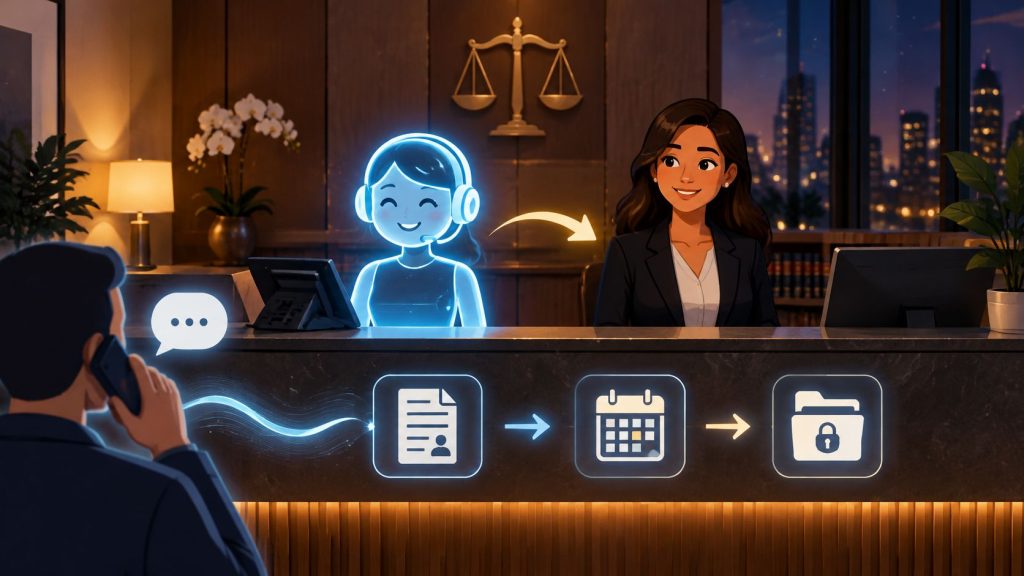
A remote intake specialist answers a new caller while an attorney is in court. The caller gives a name, mentions a former employer, and starts describing a dispute. Before the specialist can finish taking notes, someone recognizes the opposing party from a matter handled at another firm. That isn't just a confidentiality concern. It may be a conflict that requires the responsible lawyer to stop intake, check the facts, and decide whether the firm can proceed.
A lawyer conflict of interest arises when divided loyalties or duties to a current client, former client, third party, or the lawyer's own interests risk materially limiting representation. The practical answer is straightforward: firms need both sound legal judgment and a repeatable workflow that checks names before sensitive information travels through calls, calendars, shared inboxes, or case-management systems.
The rules set the boundaries, but daily procedures prevent avoidable exposure. This guide explains the main conflict categories, how jurisdictional differences affect firms, where remote support staff fit into the analysis, when consent may work, and what screening and firm policies should look like. The central principle is simple: treat a potential conflict as an operational issue from the first contact, not as a form to review after the file is open.
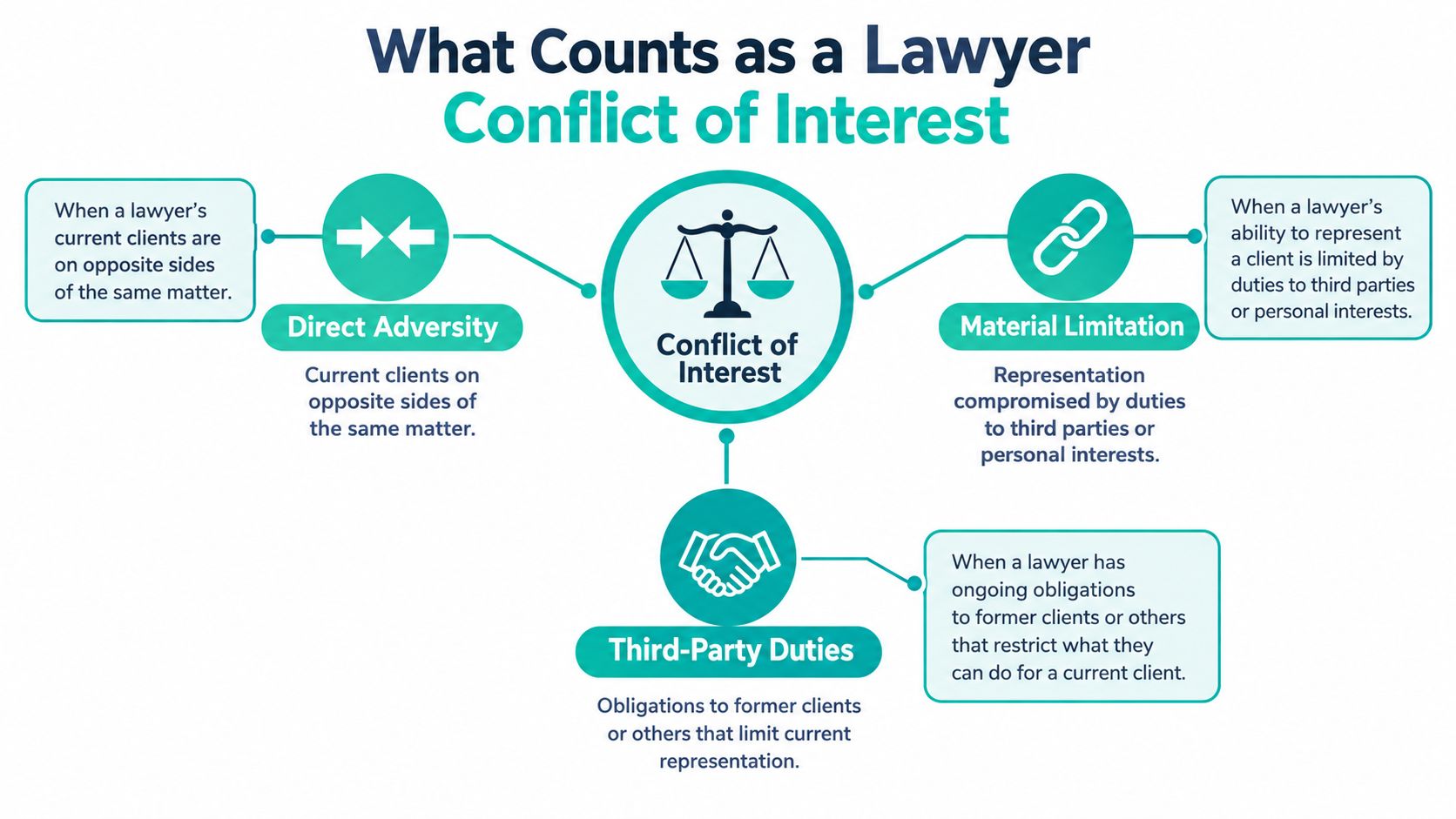
A conflict exists when a lawyer's duties or interests could prevent the lawyer from exercising independent judgment for a client. That can mean representing current clients with opposing interests, but the idea is broader: duties to a former client, another client, a third party, or the lawyer's own interests can also create a significant risk of materially limiting the representation. The concern isn't limited to what the lawyer remembers or intends to do. It includes whether confidential information or divided loyalty could affect the work.
Suppose a prospective client calls a small firm about a business dispute. A remote intake specialist hears the name of the opposing party and recognizes it from a former employer's matter file. The specialist shouldn't ask for the full story while waiting for an attorney to become available. The name is enough to pause the conversation and route the matter for review. A conflict may turn on the relationship between the matters, the parties, and the duties involved, not on whether anyone has already used confidential information.
The rules exist to protect confidentiality, independent judgment, and trust in the legal system. They aren't paperwork hurdles to be cleared by adding a broad sentence to an engagement agreement. When a lawyer's loyalty is divided, clients may receive compromised advice, sensitive information may be mishandled, and people may reasonably question whether representation is fair.
At a high level, a conflict is any situation where a lawyer or supervised staff member may expose or use one client's information against that client, or where divided obligations could materially limit the lawyer's representation. Staff don't make the legal decision about whether a conflict exists, but their access and communications can bring the issue to the surface before a lawyer has formally opened a file.
That's why the first response should be procedural: stop substantive intake, preserve the names already gathered, and send the potential match to the responsible lawyer. The categories, jurisdictional rules, and safeguards below make that first response easier to apply consistently.
The most useful way to recognize conflicts is to ask what relationship creates the risk. Under Rule 1.7, concurrent conflicts involve current clients. One form is direct adversity, such as representing one current client against another. Another is material limitation, where duties to another client, a former client, a third person, or the lawyer's own interests create a significant risk that the lawyer's judgment will be constrained. ABA Model Rule 1.7 describes these categories.
Former-client conflicts are different. Under Rule 1.9, a lawyer generally can't represent a new client whose interests are materially adverse to a former client in the same or a substantially related matter, unless the former client gives informed consent confirmed in writing. In practical terms, the new matter may overlap because it concerns the same transaction or dispute, or because protected information from the earlier work could materially help the new client. The rule also restricts using or revealing information from the former representation to the former client's disadvantage, unless that information has become generally known. ABA Model Rule 1.9 sets out those duties.
A positional conflict can arise when a lawyer's role in one matter could be used to undermine a former client's position in another. Don't assume that a different caption or a new opposing party makes the issue disappear. The practical question is whether duties arising from the earlier representation constrain the lawyer now.
Finally, Rule 1.10 generally imputes a lawyer's conflict to the lawyer's firm. A conflict identified in one attorney's history can therefore affect colleagues who never handled the prior matter. A limited screening-based exception exists for certain former-client conflicts involving a lawyer's prior association with another firm, but firms shouldn't assume screening applies without checking the rule and jurisdiction.
| Category | Trigger | Test | Typical remedy |
|---|---|---|---|
| Concurrent | Competing current-client interests | Direct adversity or significant risk of material limitation | Assess consentability; decline or withdraw if requirements aren't met |
| Former-client | New client's interests are materially adverse to a former client | Same or substantially related matter | Obtain valid informed consent when permitted, or decline |
| Positional | A lawyer's role may compromise duties to a former client in later work | Whether the prior duty materially constrains the current representation | Escalate for lawyer review; reassignment may not resolve the issue |
| Imputed | One lawyer in the firm has a conflict | Whether the jurisdiction's rule imputes the conflict and allows an exception | Apply the relevant firm-wide rule; consider a compliant screen only when permitted |
Consider a bilingual intake specialist who recognizes a caller's name from a case file at a former employer. That fact alone doesn't decide the legal question. It does give the firm a reason to pause, identify the earlier work as far as necessary, and have a lawyer determine whether the proposed matter overlaps.
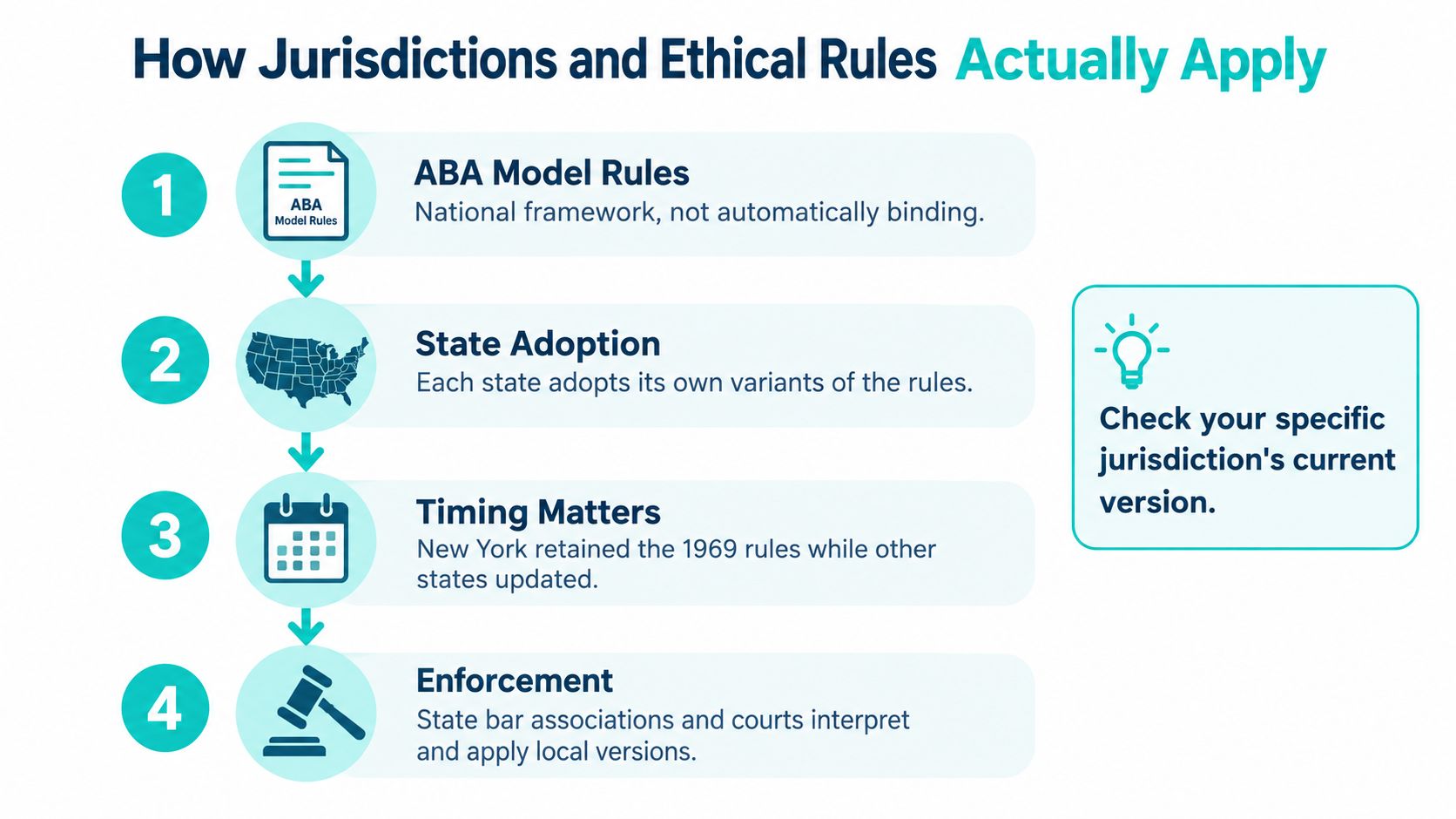
The ABA Model Rules provide a framework, but they aren't automatically binding nationwide. Individual jurisdictions adopt their own versions, sometimes with modifications, and local rules control the lawyer's obligations. The ABA adopted the Model Rules on August 2, 1983, after a review process that began in 1977; the rules replaced the 1969 Model Code of Professional Responsibility, which had replaced the earlier Canons of Professional Ethics. Cornell Law School's overview of the Model Rules explains the framework and adoption process. New York retained the older 1969 Code until adopting a modified Model Rules system in 2009.
A small firm should turn conflict resolution into a matter-opening sequence. The ABA framework has four actions: identify the client or clients, determine whether a conflict exists, decide whether the conflict is consentable, and, if it is, consult affected clients and obtain informed consent confirmed in writing. The responsible lawyer owns the legal decision, even if trained staff collect names and run the initial check.

Operational rule: Don't let a consultation become substantive before the firm has identified the parties and checked for a potential match.
At intake, staff should collect the prospective client's name, opposing parties, related entities, and matter type. The lawyer or designated reviewer then checks those identifiers against current and former-client records, determines whether a potential conflict exists, and decides what to do before the firm accepts the matter or gives advice. Record the result and any lawyer's decision in the firm's conflict log.
A signature alone doesn't establish informed consent. The client must understand the relevant circumstances, the material and reasonably foreseeable ways the conflict could affect representation, and reasonably available alternatives. The exact consentability analysis can vary by jurisdiction, so the firm should verify the governing rule before relying on a waiver, screen, or other procedure.
Treat jurisdictional review as a standing intake control, not a research task triggered only by an unusual case. The firm's checklist should identify which jurisdiction's rules apply and require lawyer review when a potential match raises a question about local requirements.
Remote staff can encounter conflict-sensitive information before a lawyer opens the matter. A receptionist may receive a call from an opposing party. An intake specialist may record names and adverse parties. A case manager may update a matter file that includes information from a former client. The risk begins at the front door, not when the attorney starts drafting.
A bilingual intake worker might hear a caller's name, immigration details, medical information, or settlement position while helping the caller explain why they need an appointment. Those details may be sensitive, but the immediate conflict check usually needs less: identities, related entities, opposing parties, and a basic description of the matter. The firm should use a narrow preliminary script and stop further fact-gathering until a lawyer clears the matter.
The ABA's guidance on remote lawyering and professional responsibility reinforces that duties such as competence, confidentiality, communication, and supervision still apply when legal work happens virtually. Delegation changes where the work is done, not who is responsible for the firm's ethical obligations.
Use this decision path to distinguish a potential legal conflict from an operational risk:
Give each role only the access it needs. A virtual receptionist may need a calendar and call-routing tools but not the firm's entire document repository. An intake specialist may need a limited lead record before clearance, while a case manager assigned to a cleared file may need matter-specific access. Firms assessing how to organize these responsibilities can review the virtual email assistant role, then define permissions based on actual tasks rather than job titles.
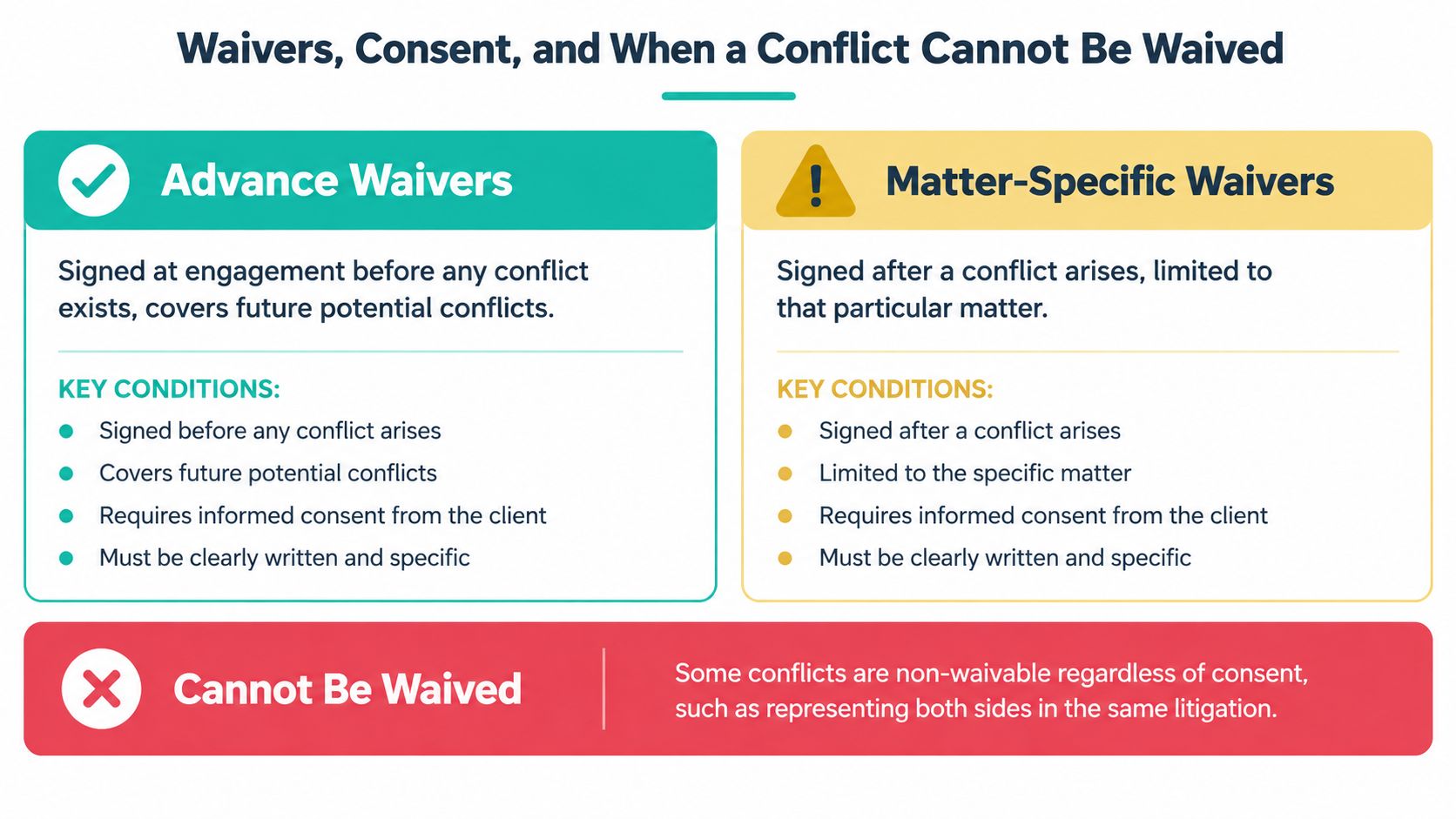
“Can the client waive the conflict?” isn't answered by the presence of a waiver clause. Some conflicts may be consentable, but a firm must first determine that the representation can proceed ethically. An advance waiver is signed when the engagement begins, before a particular conflict is known. Matter-specific informed consent follows after the firm identifies a conflict and explains what it means for that representation. A broad advance waiver can't replace a meaningful discussion of a known risk.
For a concurrent conflict under Rule 1.7, all of the following safeguards must be satisfied before representation can continue:
If the lawyer can't meet one of those conditions, a client's signature doesn't make the representation permissible. A same-proceeding claim between the lawyer's clients is not consentable under the rule. Nor does consent cure a plan to misuse confidential information, or a situation in which divided loyalty or lack of competence prevents the lawyer from representing clients diligently.
When consent is available, the lawyer should explain the actual circumstances, not just identify the rule. A useful disclosure should address:
A generic engagement-letter clause is especially weak where a shared intake employee or centralized case-management process may encounter adverse-party information. Put the firm's general conflict procedures in the engagement materials if useful, but explain a known conflict separately and specifically. A signed form should memorialize a conversation, not stand in for one.
Rule 1.10 generally imputes one lawyer's conflict across the firm, but it permits a narrow screening-based exception for certain former-client conflicts arising from a lawyer's prior association with another firm. The exception has specific conditions. The disqualified lawyer must be screened from all participation promptly, must receive no portion of the fee, and the former client must receive prompt written notice describing the screen and related compliance information. Firms should confirm that the exception is available under the jurisdiction's rules before relying on it.
A screen should be visible in the systems people use. Block the screened person from the electronic matter workspace, calendaring, document repositories, email distribution lists, and billing records. Assign a supervisor, record when the screen took effect, and prepare the required written notice. If requested under the applicable procedure, the firm should be ready to provide periodic certifications from the screened lawyer and a firm partner.
A conflict log entry should identify:
| Log field | What to record |
|---|---|
| Decision | Why the firm applied a screen and the lawyer responsible for the decision |
| Effective timestamp | When the screen and access restrictions took effect |
| Affected matter | The matter identifier and relevant parties |
| Responsible supervisor | The person accountable for monitoring compliance |
| Audit trail | Checks performed and any corrective action |
Implement the screen as soon as the firm knows or reasonably should know it is necessary. A confidentiality pledge is not enough if the person can still open the file, see the calendar, receive emails, or review billing records. For firms improving their access and matter controls, a structured law-firm document-management approach can help translate screening decisions into system permissions and review procedures.
A vendor-wide wall doesn't automatically protect the hiring firm. The firm must impose and verify its own matter-level controls; a staffing provider's confidentiality process can support that work but cannot replace it. State rules differ on screening, so validate the procedure with qualified ethics counsel or a compliance professional familiar with the governing jurisdiction.
A reliable conflict program doesn't depend on one attorney remembering every name or one form carrying every obligation. It connects intake, hiring, access, supervision, and recordkeeping. Small firms can establish the essentials without specialized enterprise tools: a conflict field in the case-management platform, a short intake script, a written escalation matrix, and a recurring review of conflict records.
Build the policy around these controls:
Common mistakes are easy to spot. Firms often treat a remote worker's conflict exposure as a confidentiality problem alone, even though screening and supervision may also be necessary. Others rely on an engagement-letter signature as the whole conflict program, assume a vendor-wide wall protects the firm, or skip diligence about a new hire's prior law-firm work. A small practice can avoid these errors by checking names early, restricting access until clearance, and routing uncertainty to a lawyer instead of asking staff to make a legal judgment.
If you are evaluating remote support, use the same standards you would apply to any person handling client information: pre-vetting, role-specific conflict screening, schedule alignment for live supervision, and documented confidentiality procedures. A remote personal assistant role should have clearly bounded duties and access that match the work the person will perform.
Conflicts are workflow problems first and doctrinal questions second. Identify the parties before collecting detailed facts, give support staff narrow scripts and limited access, and make the responsible lawyer accountable for reviewing potential matches and documenting decisions.
Waivers work only when the conflict is consentable and each affected client understands the material risks and alternatives. Screening works only when the jurisdiction allows it and the firm implements and monitors the required controls. If your practice is evaluating remote legal support, ask how candidates are vetted for role-specific fit and prior firm experience, then build your own conflict and access procedures around the work they'll perform.
VirtualLegal connects U.S. law firms with bilingual legal support professionals in Latin America, including intake specialists, receptionists, and legal assistants with prior U.S. law-firm experience. If you're assessing remote staffing, ask about role-specific vetting, confidentiality practices, and how candidate experience can fit your firm's conflict-screening workflow at VirtualLegal.