

 19 minutes read
A bilingual legal assistant is viable and valuable for multilingual caseloads when the role stays strictly operational and supervised, not when the assistant interprets legal advice. California courts recorded 630,965 interpretation events in fiscal year 2021–22, and 562,561, approximately 89%, were Spanish interpretations.
The practical hiring question isn't whether a candidate speaks Spanish at home. It's whether that person can communicate accurately with clients, manage intake and case administration, recognize legally consequential conversations, protect confidential files, and escalate legal questions without answering them. A candidate may be warm and conversational in Spanish yet struggle with procedural vocabulary, written follow-up, dialect differences, or the boundary between translating an attorney-approved message and giving advice.
That distinction matters for a solo immigration practice, a personal-injury firm handling medical records, a family-law office managing sensitive disclosures, and a civil-litigation team coordinating deadlines. The right hire improves continuity from first call through document collection and appointment scheduling. The wrong hire creates avoidable confusion, confidentiality exposure, and unauthorized-practice risk.
This guide explains how to assess operational legal Spanish, test language and software skills, secure remote access, align daily work with ABA communication and supervision duties, and integrate a bilingual legal assistant into a U.S. law firm without treating fluency as a résumé checkbox.
A law firm often discovers the need during an ordinary workday. A Spanish-speaking prospective client calls while the receptionist is occupied, a deadline question arrives by text, or a client sends documents that need to be organized before an attorney can review them. If no one can communicate clearly in Spanish, the attorney or another overloaded staff member absorbs the work, and the client may wait for an answer that should have been administrative.
California illustrates the operational scale. Approximately 6.4 million Californians, or 17.2% of the state's population, were estimated to speak English less than “very well” in 2023. Spanish was the most common primary language among residents in that group. California's court-language-access metrics also show that Spanish represented nearly nine out of every ten recorded court-interpretation events during fiscal year 2021–22.
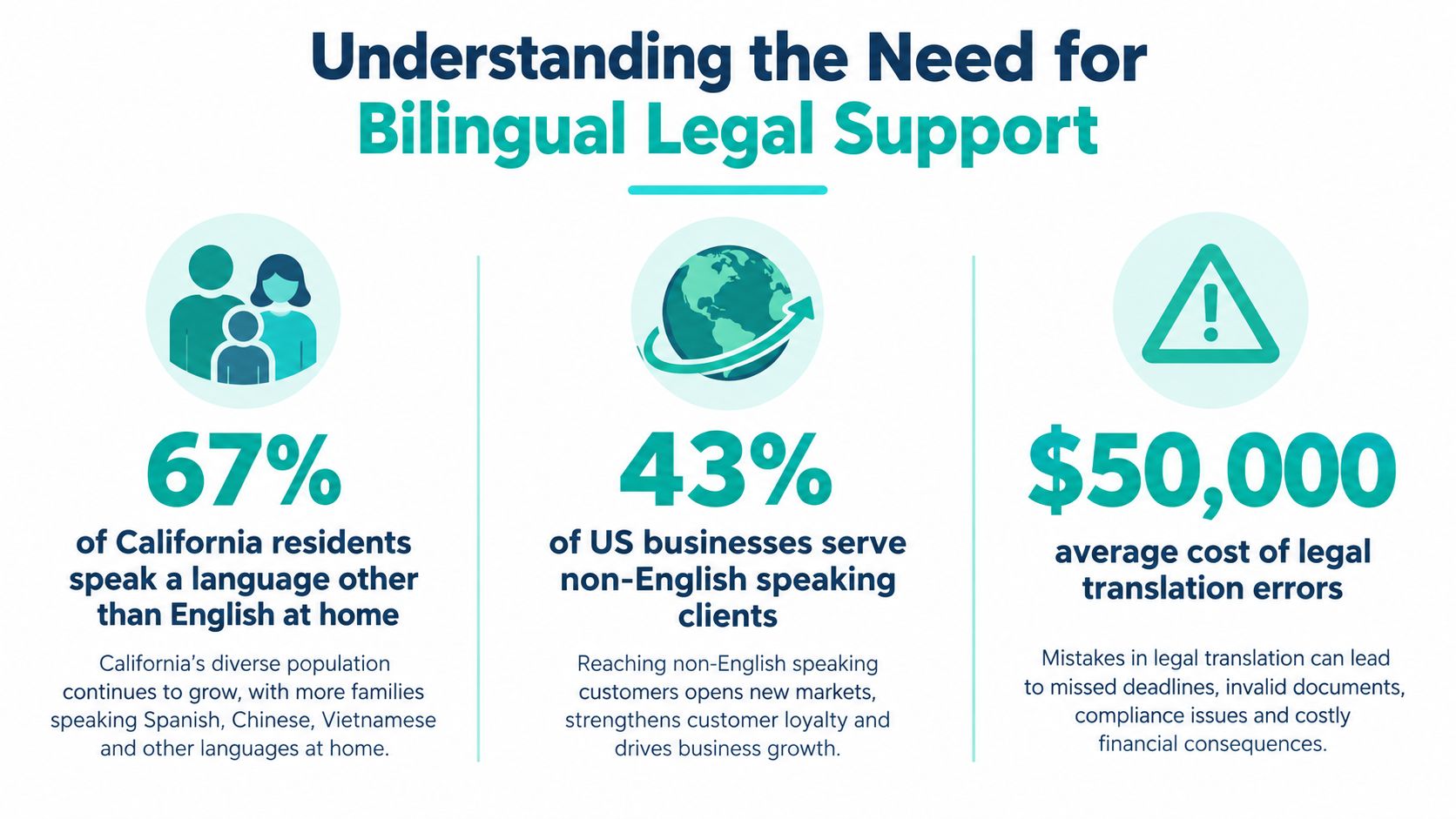
The need begins before a legal proceeding. A bilingual legal assistant may identify a client's preferred spoken and written language, schedule a consultation, request missing records, confirm an appointment, explain the status of an attorney-approved administrative process, and document the client's questions for escalation. Those tasks are different from explaining eligibility, recommending a strategy, interpreting a settlement, or obtaining informed consent.
That distinction gives managers a more useful staffing test. Ask where communication currently breaks down and which parts of the workflow require language continuity. If the problem is unanswered calls, a bilingual receptionist or intake specialist may fit. If the queue involves records, signatures, deadlines, and matter updates, a case coordinator or legal assistant may be more appropriate.
The broader labor market supports the need for disciplined support roles. The Bureau of Labor Statistics projection for legal secretaries and administrative assistants lists approximately 156,300 workers in 2024, projected employment of 147,300 by 2034, and about 19,600 openings per year from 2024 through 2034. The projected decline reflects automation and occupational transitions, but replacement demand still requires firms to find people who can maintain calendars, organize documents, update matter records, coordinate filings, and communicate with clients.
A bilingual legal assistant shouldn't become the firm's unofficial interpreter for every conversation. Instead, the role should provide a reliable bridge between client-facing administration and attorney-led legal work. The assistant can keep a matter moving in the client's preferred language while preserving a clear record of what the client asked and what still requires attorney attention.

Practical rule: Hire for the communication tasks your firm must perform repeatedly, then define the conversations the assistant must never handle alone.
Start with your own client and matter data. The U.S. Census Bureau's language-use resources can help a firm understand language patterns in its service area, but population data shouldn't replace an individual conversation about preference. Some clients prefer Spanish for phone calls but English for documents. Others may want a qualified interpreter for attorney meetings even when they manage ordinary administrative conversations in English.
The staffing decision should follow that reality. A bilingual candidate adds the most value when language ability is connected to scripts, documentation, software permissions, supervision, and a defined escalation path.
Conversational fluency and legally safe operational fluency overlap, but they aren't interchangeable. A candidate may speak natural Spanish with family and friends, understand informal conversation, and build rapport quickly. That doesn't prove the candidate can document a client's statement accurately, preserve qualifiers such as “may” and “must,” use practice-specific terminology, or stop when a question requires legal judgment.
A law firm should assess four separate abilities: speaking, listening, reading, and writing. It should also test judgment. The strongest candidate isn't the person who answers every question confidently. It's the person who knows when to say, “I'll document that question and have the attorney respond.”
| Capability | Conversational fluency may show | Operational legal fluency must show |
|---|---|---|
| Speaking | Comfort, warmth, everyday vocabulary | Clear intake questions, controlled phrasing, accurate client-facing follow-up |
| Listening | General understanding of a story | Recognition of dates, qualifiers, names, procedural terms, corrections, and ambiguity |
| Reading | Comprehension of ordinary text | Careful handling of attorney-approved instructions, forms, notices, and document-status messages |
| Writing | Informal messages or emails | Structured bilingual notes that separate client facts from staff observations and attorney questions |
| Judgment | Ability to keep a conversation going | Ability to identify legal advice, informed consent, strategy, or rights-related issues and escalate |
| Cultural awareness | Familiarity with common expressions | Willingness to ask for clarification rather than assume a euphemism or regional phrase has one meaning |
Dialect variation deserves a practical response rather than a hiring stereotype. A firm may serve clients from different Spanish-speaking countries, and the assistant may encounter unfamiliar terms for family relationships, injuries, immigration documents, or court processes. The safe response is a matter-specific glossary, a clarification habit, and a documented correction process. A confident guess is less useful than an accurate question.
A bilingual legal assistant may interpret ordinary administrative communications, such as appointment logistics, document requests, office procedures, and an attorney-approved status update. The assistant shouldn't independently explain legal consequences, recommend whether a client should sign or file something, interpret a settlement term, or answer a question about eligibility.
The ABA Formal Opinion 500 explains that language differences can require the lawyer to make reasonable efforts to ensure mutual understanding. It recommends an impartial, qualified interpreter or translator who can explain legal concepts rather than relying on an untrained bilingual employee or family member for legally significant communication.
A useful workflow is consecutive communication in short segments. The assistant or qualified interpreter lets the client finish, conveys the meaning without summarizing from memory, flags ambiguity, and confirms the client's correction. A courtroom study cited in the available evidence recorded consecutive interpretation accuracy of 98% and 95% in two trials, compared with 87% and 83% for simultaneous interpretation. The study's comparison of interpretation modes supports slowing down when a communication affects rights, testimony, consent, or case strategy.
Don't write “native Spanish speaker” as the entire requirement. Specify whether the role needs phone intake, written follow-up, document collection, medical-record descriptions, immigration-form coordination, or client-status calls. Then test those tasks in conditions that resemble the work.
A candidate who performs well should be able to:
That is the distinction to hire for. Conversational Spanish helps a person connect with a client. Operational fluency helps the firm communicate without losing accuracy or crossing the professional boundary.
A résumé can confirm that a candidate held a prior role, but it can't establish how the person handles a fast intake call, writes a bilingual case note, or responds when a client asks for legal advice. Use a practical assessment that mirrors the position you're filling. A receptionist, intake specialist, and case manager shouldn't receive the same test.
Start by defining the work in three categories:
This division prevents title inflation. A “legal assistant” who mostly schedules and collects records needs a different evaluation from a paralegal who prepares attorney-reviewed filings. The title matters less than the task boundary and review requirement.
Use a short written exercise in English and Spanish. For example, provide an attorney-approved administrative message explaining that a required record hasn't arrived and ask the candidate to produce a client-facing version in the other language. Then ask for an internal English note that records the client's response and identifies any question for the attorney.
Add a live role-play. The interviewer acts as a client who is upset about a delay and asks, “Does this mean I will win?” The candidate should acknowledge the concern, avoid predicting an outcome, document the issue, and route the substantive question. This single exercise tests empathy, listening, bilingual switching, written precision, and boundary recognition.
The test should reflect the firm's caseload. Immigration practices may evaluate document names, appointment instructions, identity details, and status-update language. Personal-injury firms may test accurate descriptions of injuries, medical providers, treatment dates, records, and insurer communications. Family-law offices should assess discretion around children, finances, safety concerns, and emotionally charged disclosures. Civil-litigation firms may emphasize parties, pleadings, discovery, deadlines, and filing logistics.
Don't use a general vocabulary quiz and assume it predicts performance. A candidate may know legal words in isolation but misuse them in a sentence or fail to preserve the client's meaning. Ask the candidate to explain which terms require attorney review and which can be used in a routine administrative message.
Give the candidate a controlled practice matter in the firm's system, with fictional or training data. Ask the person to create a contact, record language preference, enter an intake note, set a follow-up task, attach a document, and identify the next escalation step. The evaluation should measure accuracy and restraint, not just speed.
Document-management procedures deserve the same attention as language. If your firm is reviewing legal document management software, assess whether the candidate can follow naming conventions, use matter-specific folders, apply permissions, avoid local downloads, and distinguish a draft from an approved final document.
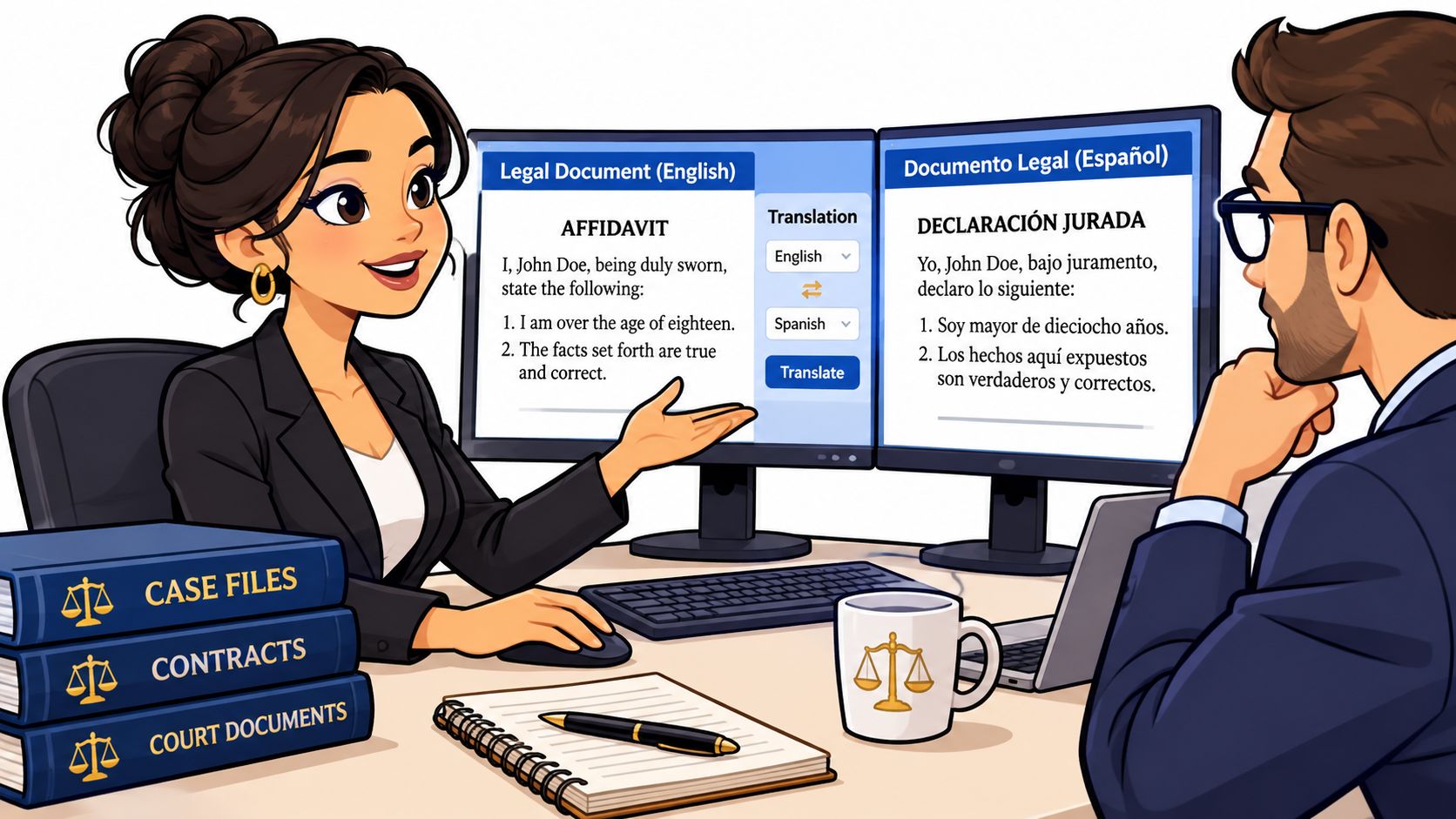
Use a written scorecard so the most personable candidate doesn't automatically win. A practical scorecard can include:
Check references for the actual work performed, not only the candidate's title. Ask whether the person handled confidential information, followed review procedures, communicated with clients in both languages, and accepted correction. A strong bilingual legal assistant should be teachable as well as capable.
A remote bilingual legal assistant can be excellent with clients and still create serious risk if the firm treats access as an afterthought. The problem is rarely geography by itself. The exposure comes from shared logins, personal devices, broad file permissions, local downloads, weak offboarding, and confusion about who responds when something goes wrong. Because this role may touch intake forms, medical records, immigration documents, discovery, billing data, and client messages, security controls have to match the actual work.
ABA Formal Opinion 498 frames virtual practice around technological competence, diligence, confidentiality, communication, and supervision. In practice, that means using strong passwords, current security updates, antivirus protection, encryption, secured wireless networks, and considering a virtual private network when staff connect through Wi-Fi. For firms hiring bilingual support, those controls are part of competent supervision, not just IT preference.
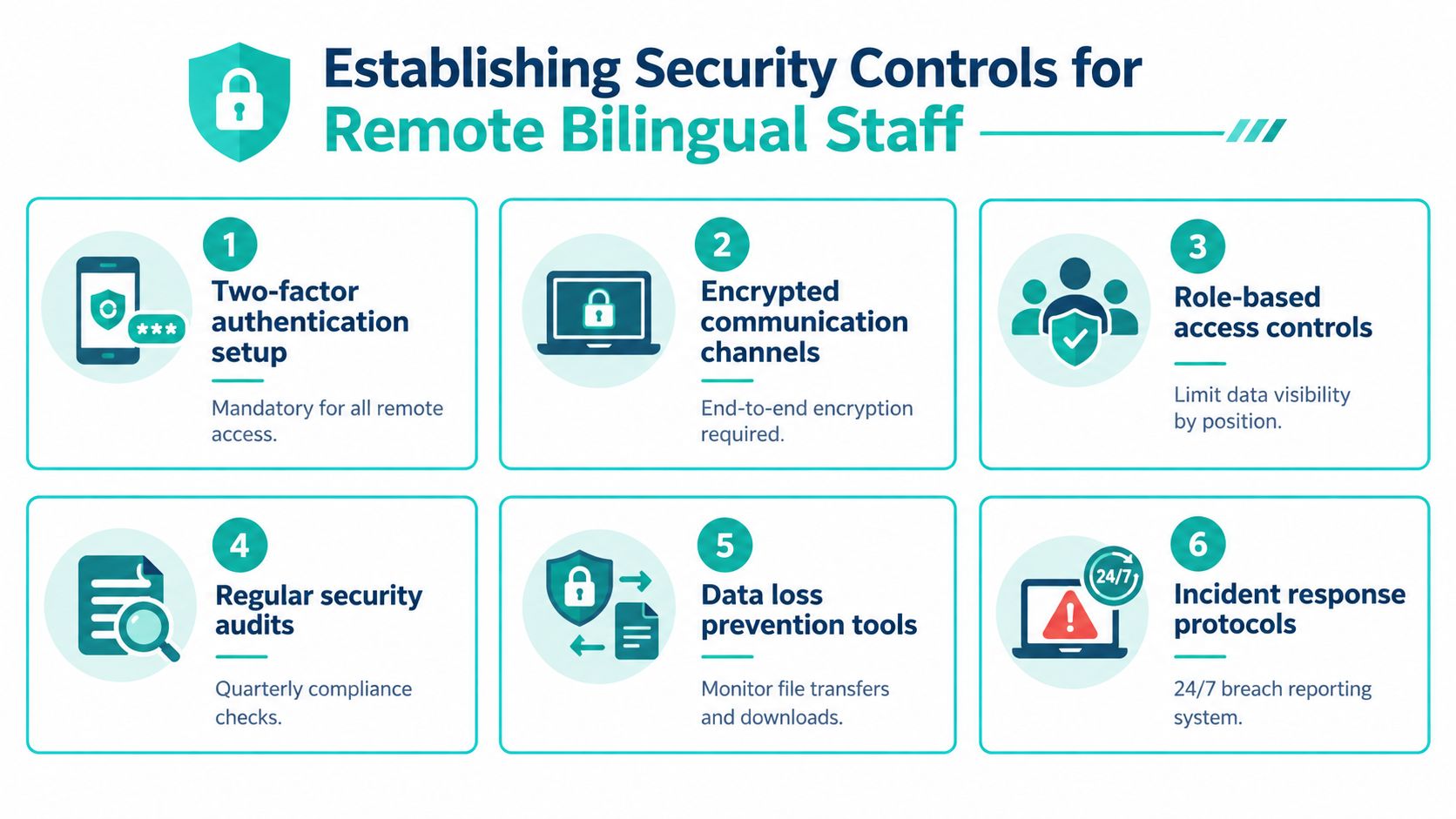
Permissions should follow the role, the matter, and the task. A bilingual intake receptionist may need the phone system, scheduling calendar, conflict-screening fields, and an intake form. That person does not need open access to full case files, privileged strategy notes, or unrelated matters. A billing assistant may need invoices, payment workflows, and approved contact information, but not discovery folders or medical detail unless the assignment truly requires it.
I have found that firms get into trouble when they hire a capable bilingual assistant and then hand over broad access “to make things easier.” Convenience is not a permission standard. If an assistant is preparing attorney-reviewed forms, provide templates and assigned client records. If the person coordinates documents, limit access to the matter folders tied to that job. If the role is case support, keep attorney-only strategy and unrelated files out of reach.
Use a role and matter matrix before the person starts:
| Role | Typical access | Deliberate restriction |
|---|---|---|
| Intake receptionist | Firm phone, intake form, scheduling calendar, conflict-screening fields | No unrestricted case files or legal strategy notes |
| Intake specialist | Intake platform, approved scripts, consultation calendar, assigned lead records | No authority to accept a matter, set fees, or give advice |
| Case coordinator | Assigned matters, document requests, status tasks, client communications | No access to unrelated matters or attorney-only strategy |
| Billing support | Billing platform, invoices, payment workflow, approved contact information | No discovery, medical detail, or privileged strategy unless required |
| Legal assistant | Assigned case files, templates, filing logistics, approved communication tools | Drafts and filings remain subject to attorney review |
| Practice manager | Administrative reporting and permissions management | Access should still be limited to business need |
This kind of matrix also helps separate conversational fluency from legally safe operational fluency. A bilingual assistant may communicate smoothly with clients in Spanish and English, but that does not justify access to every system or authority to answer legal questions. Access should reflect supervised duties, not language confidence.
Before granting access, confirm identity, confidentiality obligations, approved work location, device requirements, and the person's reporting contact. Set up individual firm-managed accounts, activate multifactor authentication where available, limit permissions to assigned matters, and require all client communications to stay inside approved channels.
During the engagement, review access regularly. Monitor unusual downloads or transfers when the firm's systems support that review. Require prompt reporting of lost devices, phishing attempts, or misdirected messages. Prohibit local storage unless the firm has approved and secured it. The ABA's guidance on virtual law practice, cited above, supports treating these controls as supervision and confidentiality measures.
At offboarding, move fast. Disable accounts, revoke sessions and tokens, recover or wipe firm equipment where applicable, transfer work product, and confirm that no client files remain in personal storage. Keep a record of who approved access, which matters were assigned, and when permissions changed.
Privacy obligations depend on the client, the records involved, and the firm's contractual commitments. A law firm should not assume a tool is “HIPAA certified,” because HHS does not recognize an official HIPAA certification. Evaluate security controls with qualified counsel or a compliance professional against the firm's actual obligations.
Email handling is a good example of why narrow access matters. If a bilingual assistant manages a virtual email assistant workflow, the role may need a shared inbox, approved templates, calendars, and routing rules. It does not need the entire case-management database just because the inbox connects to it.
The same logic applies to overseas staff. Location can affect contracts, data-transfer analysis, and professional responsibility issues, so those questions should be cleared before confidential information is shared. Operationally, the control standard stays the same: least-privilege access, individual credentials, secure systems, documented supervision, and a prompt incident response process.
A bilingual legal assistant can improve a firm's communication system, but the lawyer remains responsible for legal advice, informed consent, strategy, and the client's understanding of legally significant decisions. The assistant's job is to make the system reliable, not to substitute for the lawyer.
ABA Model Rule 1.4 requires lawyers to keep clients reasonably informed, promptly comply with reasonable information requests, consult about objectives, and explain matters as reasonably necessary for informed decisions. A bilingual assistant can operationalize those duties by logging requests, tracking deadlines, sending attorney-approved updates, and escalating unanswered questions.
A controlled bilingual workflow can follow this sequence:
The assistant should never promise an outcome, decide whether the firm has a conflict, set a fee, recommend a legal option, or tell a client that a filing is safe to delay. A script can help, but scripts shouldn't become a substitute for judgment. The assistant needs permission to stop and escalate.
The safest message often has two parts. First, the assistant conveys the administrative fact that has been approved, such as which document is missing or when an appointment is scheduled. Second, the assistant records the client's question and tells the client that the attorney will address the legal issue.
For example, an assistant can say that the firm received a medical record and that the attorney will review it. The assistant shouldn't say whether the injury supports a claim. An assistant can confirm that an immigration consultation is scheduled and list the documents requested by the firm. The assistant shouldn't decide whether the client qualifies or explain the likely result of an application.
Supervision should include observed calls, periodic review of bilingual messages, terminology updates, and correction logs. Ask whether the assistant preserved the client's meaning, identified uncertainty, used the right language, and escalated the issue at the right time.
The supervising attorney should also review when a qualified interpreter or translator is necessary. A family member may be convenient, but convenience doesn't resolve confidentiality, impartiality, accuracy, or informed-consent concerns. The firm should document interpreter identity when appropriate and record any clarification that affects the matter.
The assistant keeps the communication process moving. The attorney remains accountable for what the client is advised to do and what the client understands.
Begin with a written role map. Decide whether the immediate need is reception, intake, scheduling, case coordination, document preparation, billing support, or a combination. Then choose part-time or full-time coverage based on the queue and required hours, not on a generic title.
Match the candidate to your software ecosystem. A person who understands Clio may still need training in MyCase, Filevine, CASEpeer, SmartAdvocate, Smokeball, RingCentral, or DocketWise. Give the assistant a test matter, approved scripts, a glossary, an escalation chart, and a named supervisor before assigning live work.
A practical first-week sequence looks like this:
For firms comparing a self-managed search with a structured provider, Legal Virtual's remote legal assistant management approach is one option that connects U.S. firms with pre-vetted bilingual support professionals based in Latin America. Its available roles include intake, reception, case coordination, legal administration, scheduling, and routine follow-up, with candidates matched to firm workflows and software.
The decision should remain operational. Hire the person who can communicate accurately, respect the attorney boundary, protect client information, and follow your system consistently.
A bilingual legal assistant can be a strong addition to a U.S. law firm serving Spanish-speaking clients, but conversational fluency alone isn't enough. Hire for operational legal fluency, test speaking, listening, reading, writing, terminology, software behavior, and escalation judgment, then restrict the role to supervised administrative work.
Define access by matter and responsibility, document language preferences, use attorney-approved communications, and establish clear triggers for qualified interpretation or attorney involvement. If you need a remote bilingual candidate, compare providers by vetting method, software alignment, security process, supervision support, and the exact duties the assistant will perform.
Legal Virtual connects U.S. law firms with pre-vetted bilingual English-Spanish professionals for intake, scheduling, case coordination, legal administration, and client follow-up. Review the available roles and request a shortlist through Legal Virtual.